Room & Board reduces energy at headquarters with next gen rooftop unit
Download Case Study Related Report
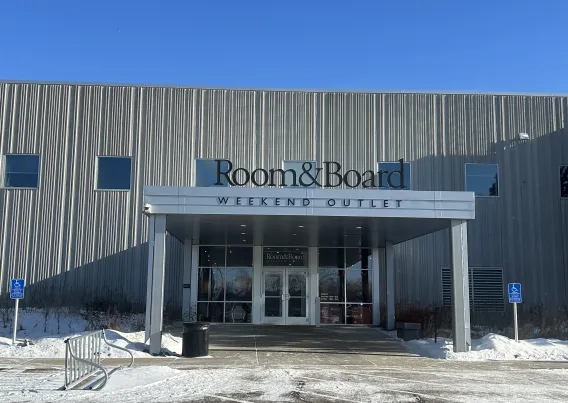
Founded in 1980 and 100% employee-owned, Room & Board is a Minneapolis-based furniture company with a long-standing commitment to sustainability. As part of their ongoing decarbonization efforts, Room & Board was seeking to replace an aging gas furnace and AC rooftop unit with a more energy efficient and environmentally friendly option. So, when it came time to upgrade their aging system, Room & Board saw an opportunity to install next gen rooftop unit (RTU) technology.
Next gen RTUs are a proven technology consisting of packaged heating and cooling units that use energy efficient technology to effectively heat and cool a commercial space, reducing energy consumption and emissions.
| Project Name | Location | Primary Objective |
|---|---|---|
| Room & Board Headquarters | Golden Valley, MN | Reduce energy use and rely on renewable energy for heating load |
Getting Started
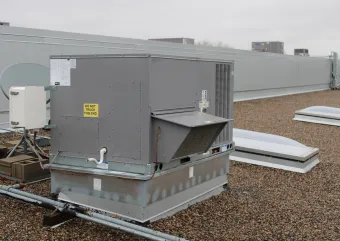
As part of planned 15-year equipment replacement cycle, the Room & Board facility team identified a need to replace an aging HVAC unit that served the employee gym at their headquarters. With the support from a trusted mechanical contractor, Room & Board selected a 5-ton all-electric heat pump RTU to serve their office gym, providing heating, cooling, and ventilation needs. All-electric heat pump RTUs support Room & Board’s goal to increase energy efficiency while utilizing energy from their rooftop solar array.
This installation offered Room & Board a unique opportunity to test the real-world performance of an all-electric heat pump RTU in a cold climate and positioned them as a leader in sustainable commercial HVAC. By moving forward with an all-electric heat pump RTU, the team is exploring what could become a new standard for HVAC replacement, while giving similarly sized businesses the opportunity to learn from Minnesota-based results.
“As we continue to optimize the system, it is expected to outperform the unit it replaced. During extreme cold conditions, the backup fuel source engages as designed and effectively maintains comfort levels.”
The Solution
The installation was straightforward and no concerns were raised during installation or startup. Room & Board was satisfied with unit performance and installed a second heat pump RTU to support an open office space in the same building.
To better understand the system’s performance, Room & Board connected with the Next Gen RTUs initiative team to explore how they could showcase the potential of heat pump RTUs and better understand their energy and emissions savings. As part of a Next Gen RTU demonstration project, the team worked with Room & Board to monitor and analyze the system’s performance.
Through this work, they aimed to:
- Demonstrate that heat pump RTUs can perform in Minnesota’s cold climate without compromising comfort.
- Showcase energy savings and operational benefits in real examples.
A report on the findings from the study can be found online.
Results
To understand how the heat pump RTU performed, the Next Gen RTUs team monitored the unit’s energy use and airflow throughout the 2024–2025 heating season. A power meter tracked total electrical use, while data loggers measured temperatures and system behavior. This arrangement gave the team data on how efficiently the RTU heated the space, how often auxiliary heat was used, and where performance could be improved.
The heat pump RTU reliably heated the building through cold weather and used less total energy than a standard gas furnace RTU. It also used less total energy than all modeled alternatives, including dual fuel systems and electric resistance heat.
However, cost savings didn’t quite match the energy savings. High-demand charges and the difference between electricity and natural gas prices led to higher overall utility costs. High energy use in the mornings also increased reliance on the electric resistance backup. Room & Board is partnering with Next Gen RTUs to study the units without overnight setbacks to see if the reduction in morning warm-up saves more energy than the overnight setback.
This project is part of the growing effort by the Next Gen RTUs initiative to promote better HVAC solutions that are efficient and practical. By spotlighting real-world examples like Room & Board’s Headquarters, the Next Gen RTUs team encourages building owners and facility teams to confidently install next gen RTUs that will reduce building emissions and meet company sustainability goals.
Lessons Learned
- Commercial heat pumps are viable in cold climates: With proper planning and controls, commercial heat pumps can reliably heat spaces even in cold conditions.
- Auxiliary heat can decrease efficiency: Controls that limit electric resistance use, such as reducing or removing setbacks, are essential to both cost and energy savings. High-demand charges may reduce the cost benefits of electric-only systems depending on rates.